

During the Middle Ages, clerics saw society as three orders: oratores, bellatores, and laboratores (those who pray, those who fight, and those who work). In The Three Orders, Georges Duby shows how bishops used the scheme as a tool to protect the strict division between the clergy, the nobility, and the peasants.
While well protected, this division did not last too long. The Templars blurred the boundary between oratores and bellatores. Later, at the Battle of Crécy, laboratores came to fight bellatores, challenging the division between those who work and those who fight.
In an earlier essay, I called the Battle of Crécy the first longbow moment. Now we are living through a second longbow moment, when the programming craft, until recently mastered by a few, is available to everyone. Both are technodynamic phenomena in which technologies co-determine social tectonics. Today, coding agents write code and, along the way, refactor the social order.
Andrej Karpathy, who coined the term “vibe coding,” was also among the first senior software engineers to embrace the practice. Many others were skeptical of it or derisive at first, pointing out the many flaws and risks of AI-written code. But their attitude has changed. Now most of them command armies of coding agents.
In October 2025, Karpathy wrote a small ChatGPT-like tool by hand. He tried with coding agents and found them “net unhelpful.” He had a fallback: his craft. For him and for all experienced software developers, unlike the majority of vibecoders, AI works only as an amplifier and accelerator. For all the rest, the AI connection is a lifeline.
People who had never coded before now spawn bespoke apps, some of them so whimsical that we should call them idiosyncrapps. But while they produce these highly personalized apps, they do so using a craft they don’t personally own.
Programming used to be like literacy. Once acquired, it couldn’t be taken away. In Autonomy on Lease, I called that free autonomy. Now that craft is available on lease. It is rented, metered, with non-negotiable terms that can be revised at any time (and are), a craft revocable without notice. That craft gives unprecedented new autonomy, but that is an autonomy on lease.
Two years before he coined “vibe coding,” Andrej Karpathy tweeted:

This post got close to 13 million views. It described what sounds like the natural evolution of programming. Each subsequent generation moves further away from machine code and closer to natural language: Assembler, then Fortran, then Lisp, then C, and later Python, which is almost like structured English. The next step would be to program in natural English, as Karpathy wrote.
Not quite. There are two differences.
The first is determinacy. A program, written in any earlier programming language, however far from machine code, was a complete specification. The language fully determined what got executed. In contrast, a prompt underdetermines what gets executed. The model fills the unstated parts. If you run the same prompt twice, you’d get two different programs.
The second is ownership. Nobody rents compilers. They don’t even sell them so much anymore. Microsoft started selling its C compiler in 1983, and so did Borland. But that practice was soon restricted to enterprise use only. Now free compilers are the norm. Something similar might also happen with coding agents if open-source models become as powerful as frontier commercial models and can run on affordable hardware. Yet, even then the whole setup will require skills most of the vibecoders don’t have. So knowing English (or another language the models handle well) may feel like all it takes to start vibecoding. That holds only on the surface. What fills the gaps and produces executable code is the model, and the model is leased. The hottest new programming language is not just English but English on leased steroids.
So what did the leasing of the craft do to each group with a hand in making software?
The New Orders
The answer to this question groups people into seven orders.
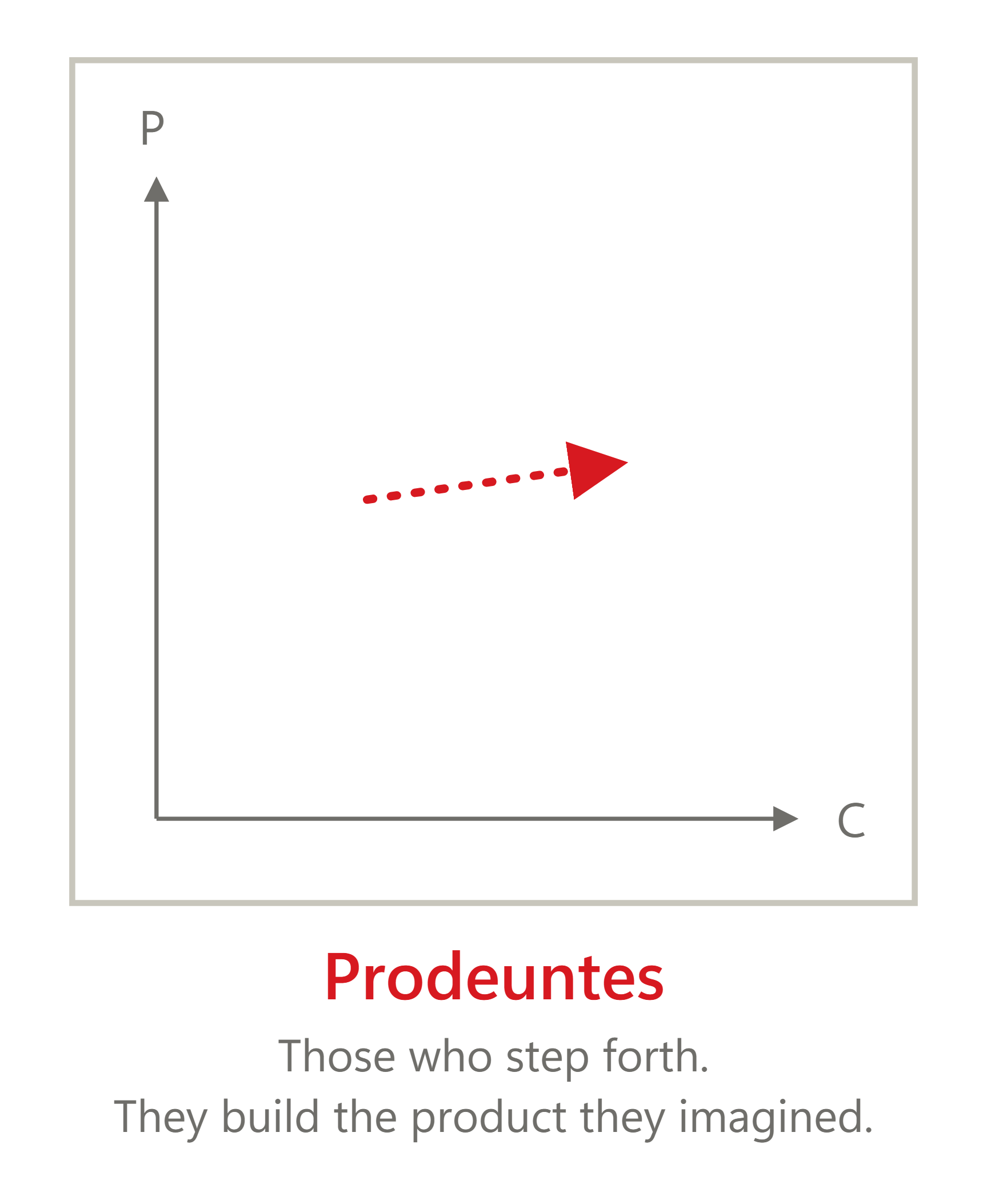
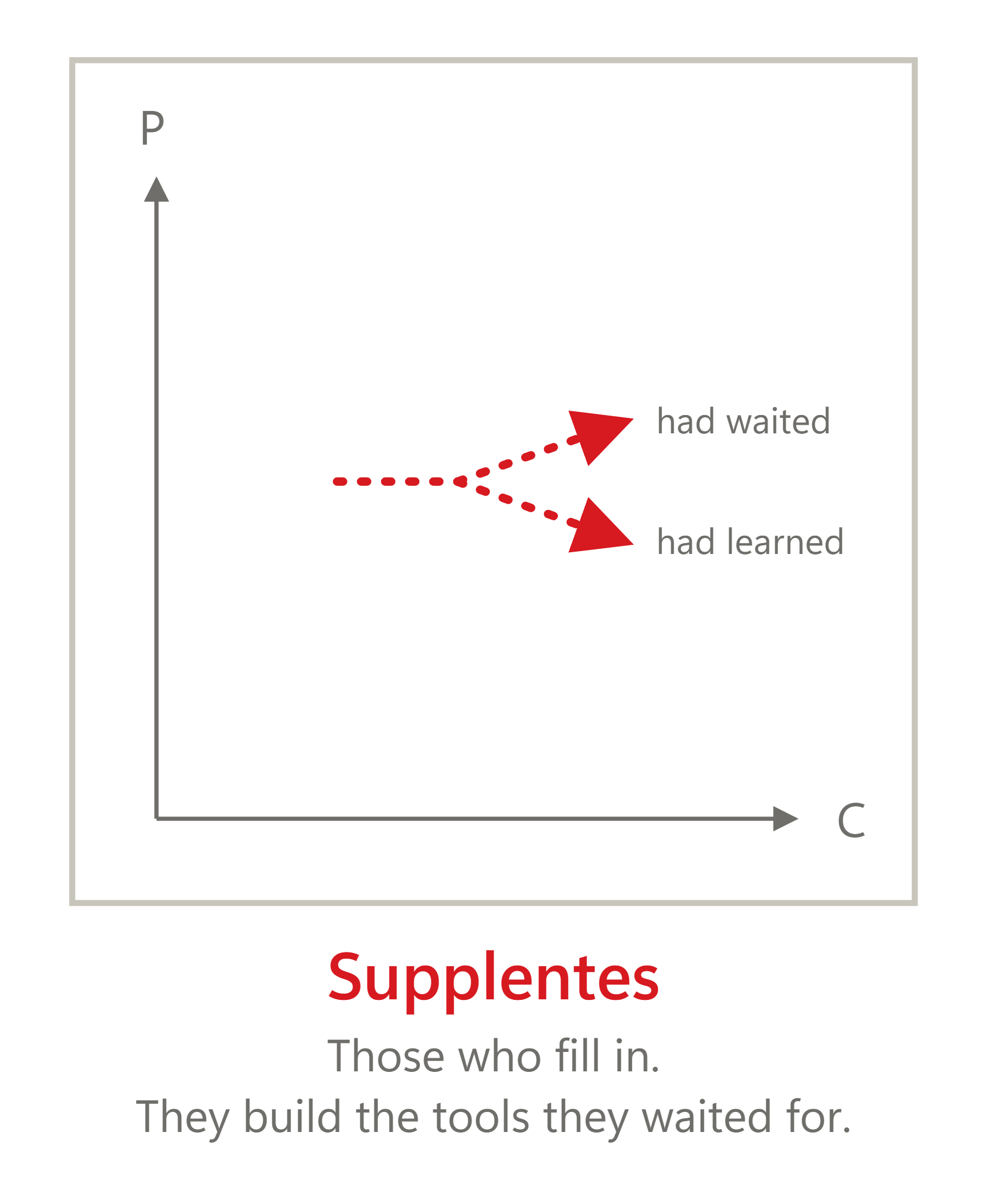
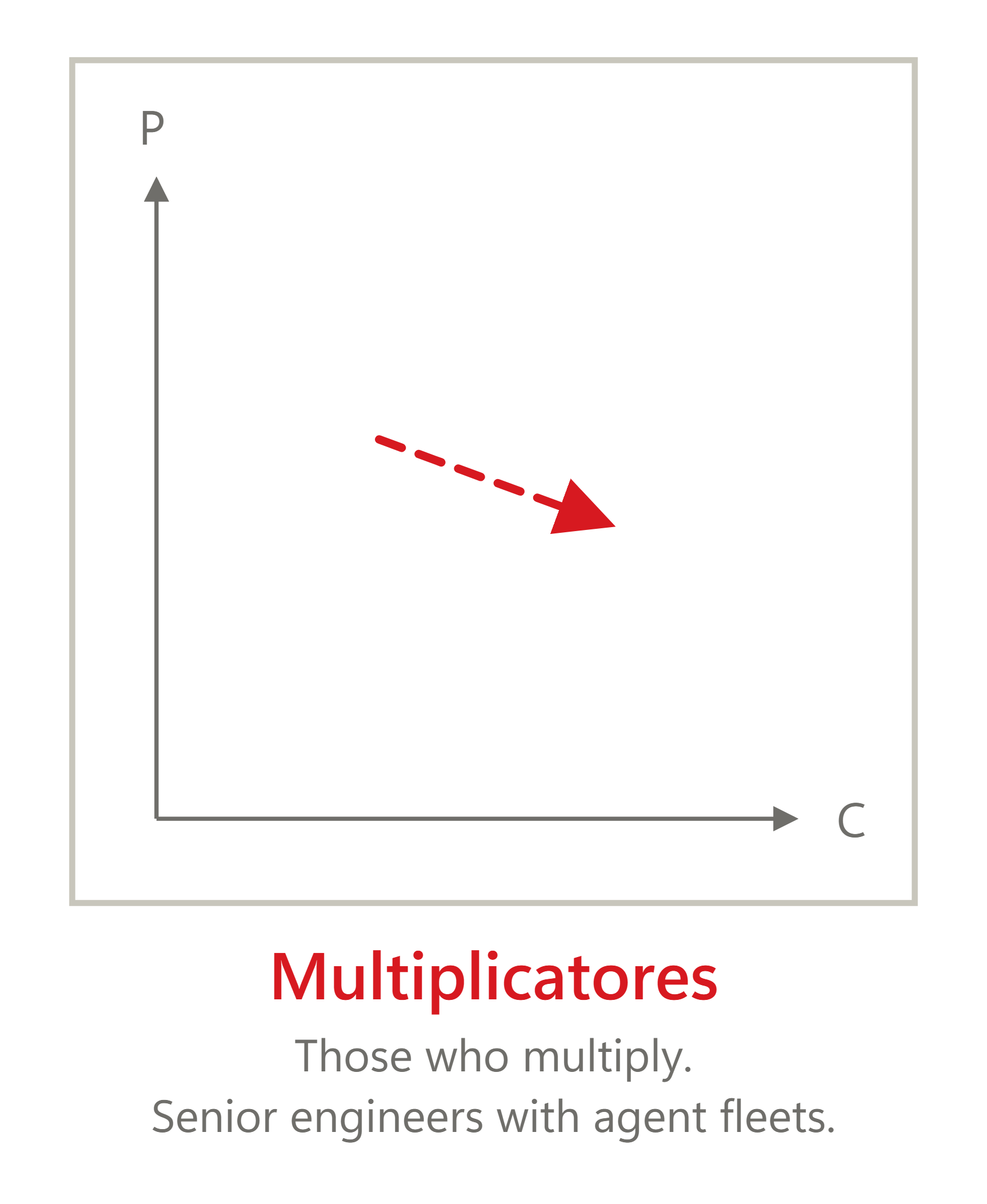
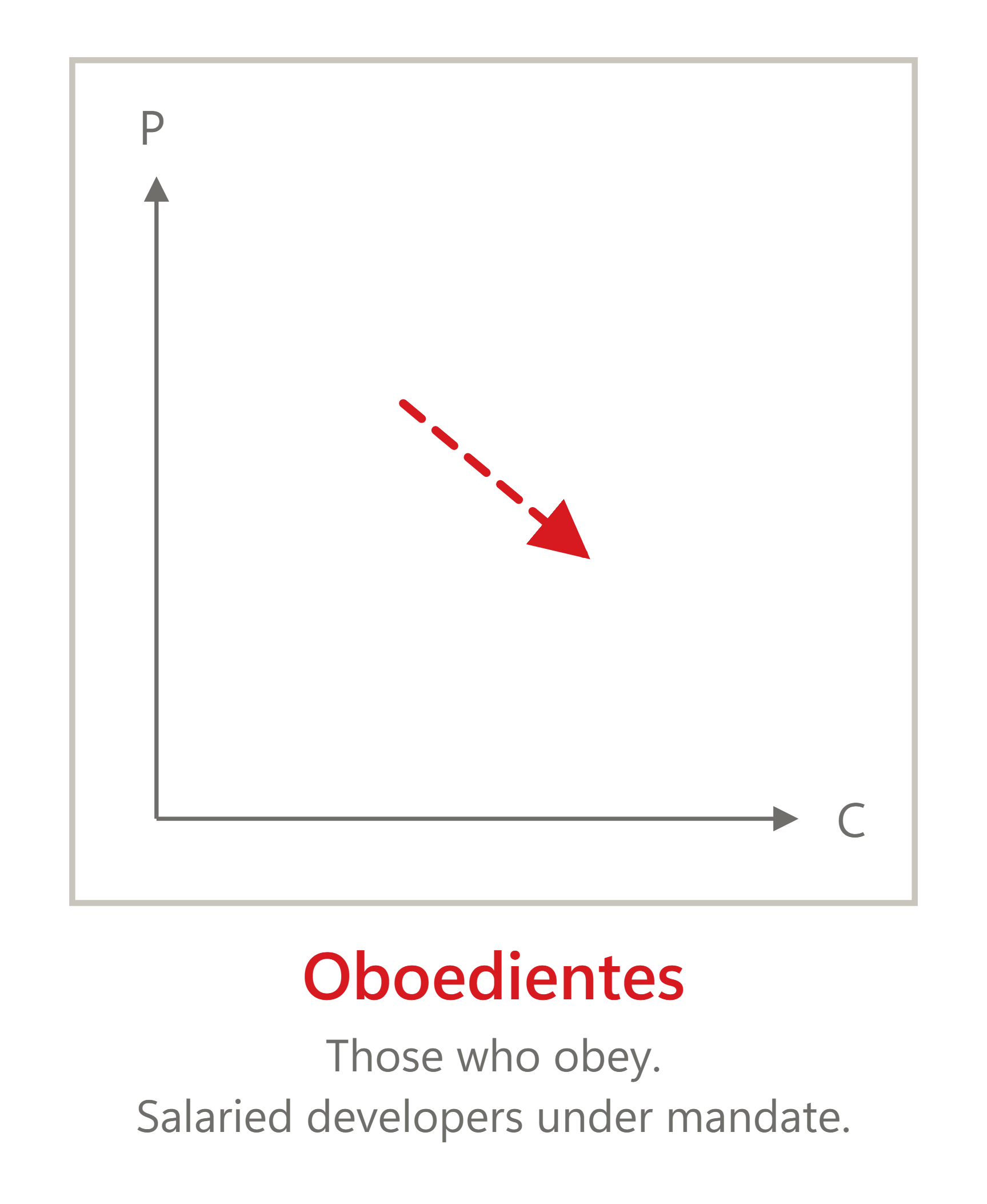
Each order is defined by what the leasing of the craft did to its members. Orders move, and their movement can be traced in the autonomy plane. Every coordination mechanism moves the participants in the coordination regime it creates. Participation costs autonomy, because coordination is achieved through constraints. The discretion participants keep inside the regime is their participatory autonomy (P). A coordination mechanism can also open a decision space that did not exist before, the way HTTP opened the web to anyone who follows the protocol. That space is their consequential autonomy (C).
The plots for each coding order show only direction, not position. They are represented by a solid line if backed by solid evidence in both dimensions, by a dashed line if it has solid evidence in one dimension and the other is inferred, and by a dotted line if both are inferred.
Now the seven orders, with names following the formula of the medieval triad.
Prodeuntes
Those who step forth. These are the newly equipped who made a zero-to-hero jump. When programming became available as a leased craft, it miraculously enabled them to create the tools they had imagined, or dared to imagine only now, once the skill barrier was down. Some of them are freelancers who build tools that turn them into micro-factories. Others started shipping software to strangers.
The proedeutes can’t read the syntax or know how to make their software safe, yet gain significant benefits and often successfully solve problems they cared about but lacked the skills to address.
Who are the software shipping prodeuntes? Lovable, in their 2026 survey The Build Economy, identified founders, designers, and sales professionals as the fastest-growing on their platform. Since that is vendor-sampled, the fact that founders come on top is not a finding. Founders are their target group. A more interesting signal comes from China. Not only do serial entrepreneurs find new opportunities, but also people become entrepreneurs for the first time, thanks to the new possibilities space opened by AI-assisted coding.
On the autonomy plane, proedeuntes have made the largest consequential jump of the seven orders. Yet, no big change in their participatory autonomy: editing what they build is beyond them.
Supplentes
Those who fill in what they are missing. The leased craft lets them fill their needs without asking anyone. These are business people whose needs were badly served by IT or not served at all. In the past, some of them learned enough of the craft to bypass the IT department. Others just gave up. Now both groups make up the order of supplentes.
In Application Development Without Programmers (1981), James Martin sought a solution to the well-known problem that the development process, from the articulation of needs to delivery, is slow and lossy. According to him, the users should specify what they want, and the fourth-generation programming languages should know how to implement it. That’s more or less what we see today with coding agents. Yet the urge to fill in what was needed was present all these decades in between and found its outlets: from spreadsheet mastery and Access databases to servers outside the IT radar and various practices collectively known as “shadow IT.” In 2021, Gartner found that 41 percent of employees built outside IT reporting lines.
I have delivered quite a few corporate training sessions on semantic technologies. Most attendees came from the business. In one large organization, where I trained over 100 employees in a series of courses, nobody from the IT department signed up. The majority were domain experts who had given up waiting for a solution to their needs or were unhappy with what they got and had learned enough programming to solve their data problems themselves.
The lease removed that constraint. Domain experts don’t need to learn programming or attend endless meetings to translate their requirements. They can simply prompt what they need into existence.
The order of supplentes combines two groups: those who waited and those who didn’t. Both gain consequential autonomy. Those who waited can now decide what the thing does and prompt it into existence. Their participatory autonomy goes up. For the business people who had learned to code, participatory autonomy declines slightly, because what they build now runs on somebody else’s terms.
Multiplicatores
Those who multiply. The leased craft multiplied their capabilities. These are the senior software engineers, at first skeptical about AI-generated code, now commanding fleets of coding agents, and building fleet-governing machines. They don’t read every line of code but can if needed, and if AI coding disappears for whatever reason, they can do it by hand. Like Karpathy, they have a fallback.
The multiplicatores were the profession’s last skeptics. They didn’t trust AI-generated code at first, and rightfully so. The generated code was of poor quality, and the productivity gain was illusory. Mitchell Hashimoto, cofounder of HashiCorp and creator of Ghostty, wrote:
I felt I had to touch up everything it produced and this process was taking more time than if I had just done it myself.
The slowdown was real, even when they felt more efficient. In 2025, one study found that AI-assisted coding, contrary to expectations, slowed down developers.
But that has changed.
Armin Ronacher, the creator of Flask and Jinja2:
If you would have told me even just six months ago that I’d prefer being an engineering lead to a virtual programmer intern over hitting the keys myself, I would not have believed it.
Using coding agents no longer slows them down. Yet, it certainly wears them down. (Bot-sitting fatigue deserves an essay of its own. I expect a lot of burnout.)
The tipping point probably came when a coding agent could complete a task independently.
The multiplicatores’ production constraint moved from the number of hours they had to their token budget.
Their consequential autonomy went up for them as well, but their participatory autonomy fell because somebody else revises their quota.
Oboedientes
Those who obey. They are salaried developers (and not only developers), whose employer signed the lease for them. This year, Meta ties performance review to AI use. For the development division of Microsoft, using AI is no longer optional. JPMorgan went further, tracking each engineer’s use of its coding assistant on a dashboard, and Coinbase went further still, dismissing non-adopters. In short, the use is obligatory, and the sub-lease arrives together with the surveillance.
It doesn’t happen in all sectors at the moment. I found no signs of mandated use in utilities, telecoms, and government.
Servientes
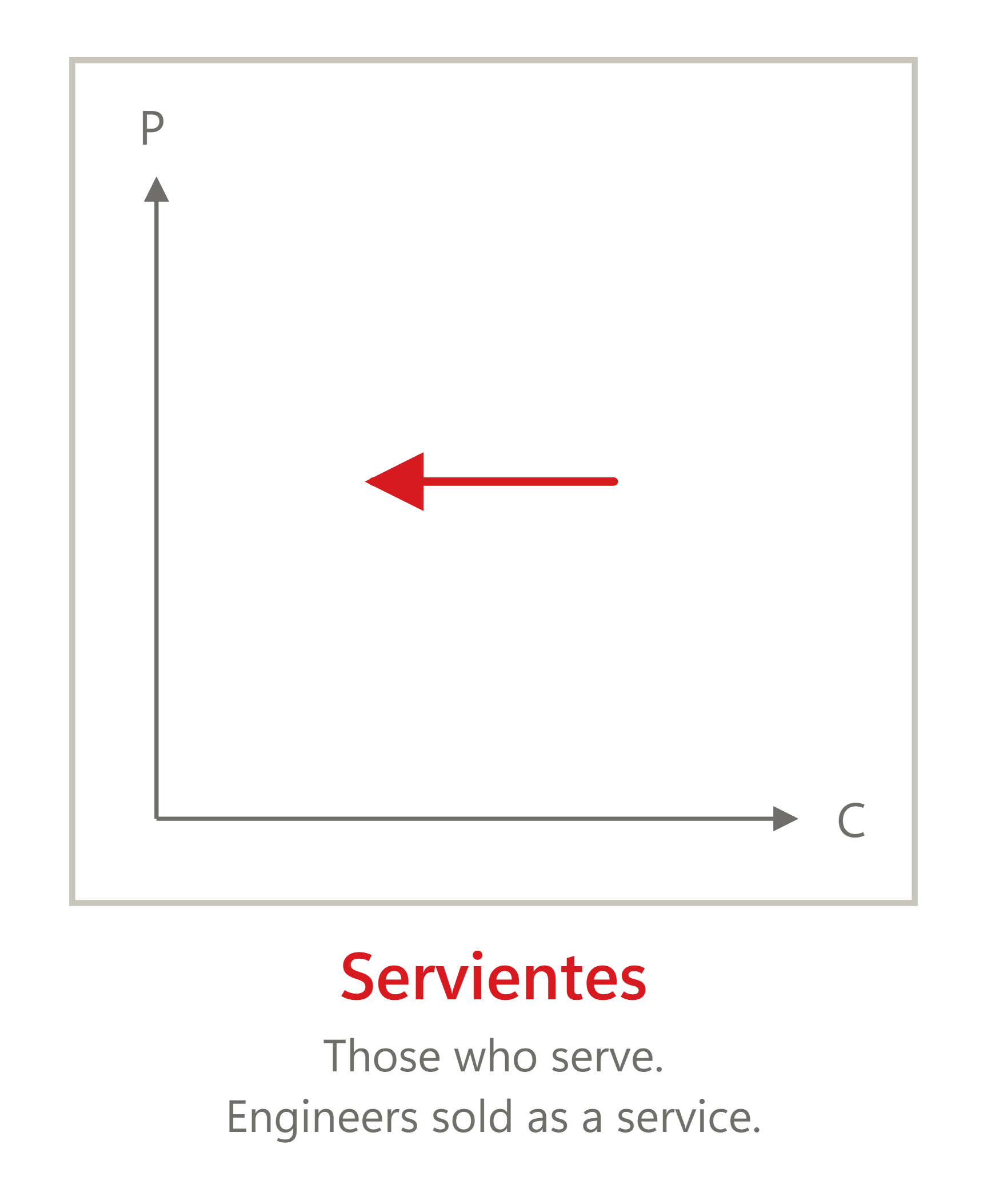
Those who serve. These are software engineers from low-income regions hired en masse to minimize development costs. An entire industry known by different names: development outsourcing, offshore development, less politically correct terms such as body leasing, or, at the American euphemistic extreme, staff augmentation.
Servientes in companies experienced what the chief executive of the Indian firm HCLTech, C. Vijayakumar, called “AI deflation” – the same deal now worth 20% less.
Freelance servientes seem to be hit harder by an actual shrink in demand: coding job postings fell 21% on freelance platforms eight months after the introduction of ChatGPT.
And that’s not only in India. The annual value of new IT outsourcing contracts fell 5.6 percent worldwide in the first half of 2026, and 23 percent in the Americas in the second quarter.
Cultores
Those who tend. They tend the commons, and the commons now gets oversown.
The cultores are the open-source maintainers. They can’t keep up anymore with the amount of AI-generated pull requests they have to review. In Mitchell Hashimoto’s words, agents “eliminated the natural effort-based backpressure that previously limited low-effort contributions.” Now, a plausible bug report or pull request takes minutes to produce but still takes an hour for a human to judge. Reviewing can take up to six hours a day, a GNOME extensions reviewer wrote.
It didn’t take long for the cultores to respond: curl closed its seven-year bug bounty, tldraw began closing every external contribution, and the Linux Foundation raised $12.5 million for triage tooling.
The leased craft changed how many hours cultores spent reviewing, so they are affected in a way not measured on the autonomy plane.
Petitores
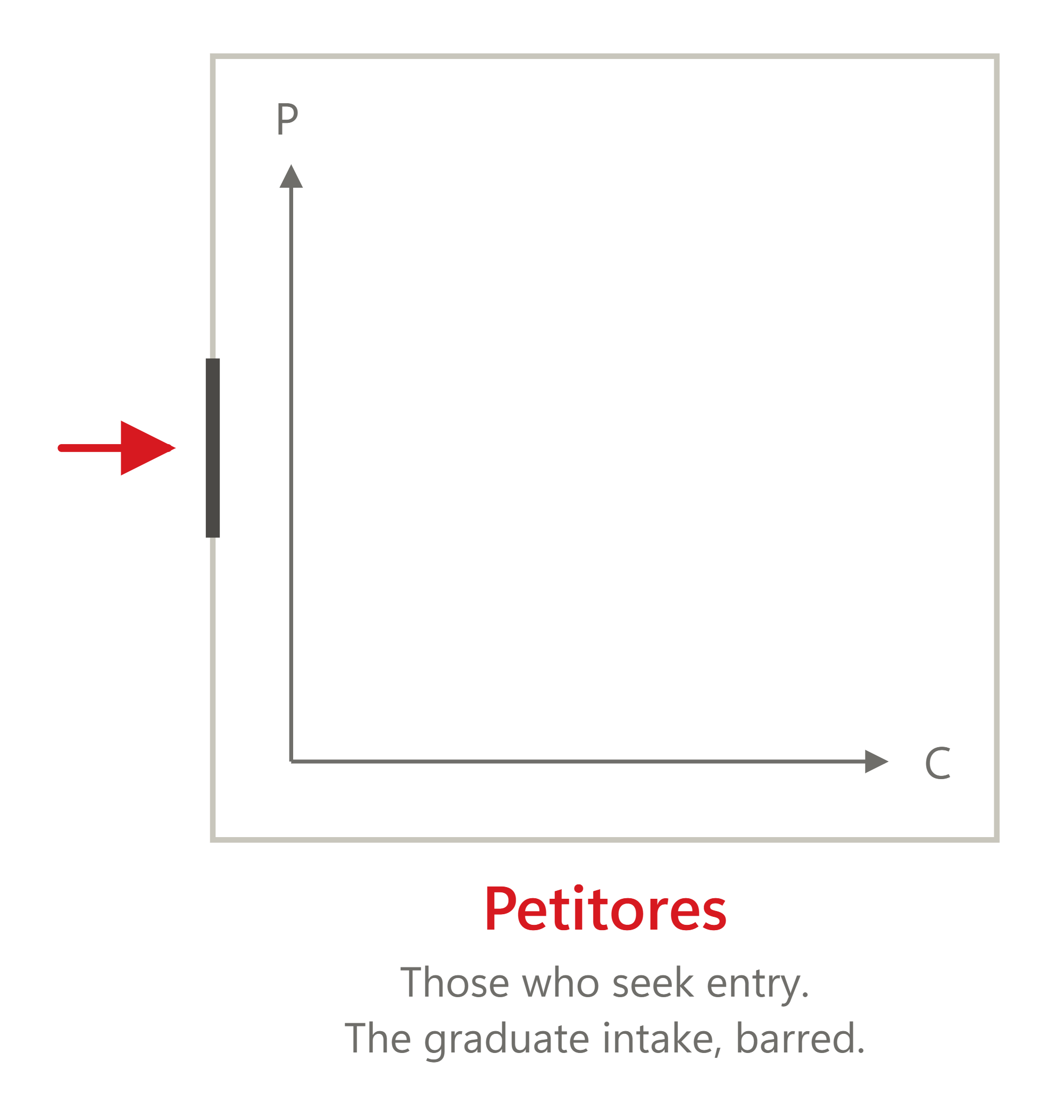
Those who seek entry. The unadmitted. They are the graduate intake: software engineering students trained to acquire the craft in the years when the craft went to the lease. While AI agents were getting better, they were already good at what a junior developer can do. In ADP’s payroll records, employment of 22-to-25-year-olds in AI-exposed occupations stood at 19 percent below where it would be had it kept pace with their less-exposed peers by June 2026, up from 15 percent a year earlier. No such gap for experienced workers (yet).
The same person can be in more than one order. For example, some who are oboedientes by day are cultores by night.
The two longbow moments share their throughput. Both rest on “enough arrows, fast enough, to make perfection unnecessary.” But there is an important difference. The yeoman’s skill was his own, and no one could meter it or take it back. The second moment hands out rented kit, metered and revisable. It also thins the stock of people who hold the craft, because fewer petitores get in to learn it. The first longbow moment gave the yeomen free autonomy. The second gives its orders a lease. And coordination control concentrates, as the Second Law of Technodynamics predicts, with the providers of frontier models.
The AI-driven social tectonics has not settled. This was just a September 2026 snapshot.